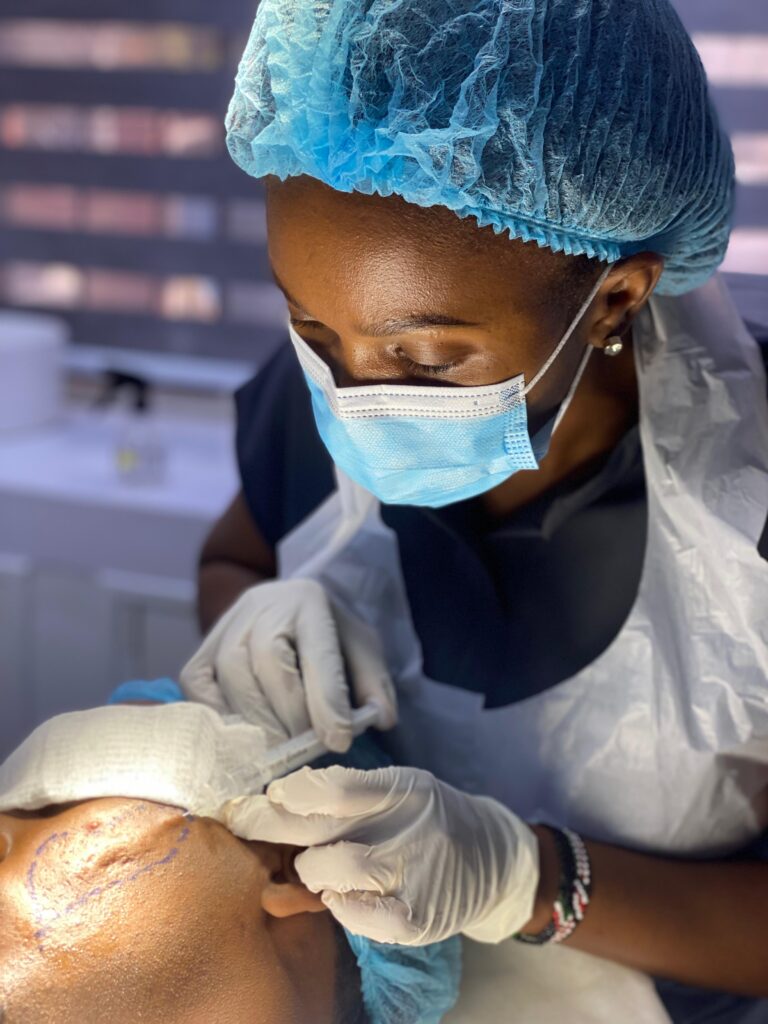
Subcision for Acne Scars
Subcision for acne scars is a minimally invasive procedure used to treat depressed (sunken) scars at Jalad Aesthetic Clinic. These scars form when fibrous bands pull the skin downward during healing. Subcision for Acne Scars works by releasing these tethered scars and stimulating new collagen formation, allowing the skin to rise and appear smoother over time.
Furthermore, we often combine this procedure with other treatments such as microneedling or PRP for enhanced results.
Are You a Candidate for Subcision for Acne Scars?
You may be a good candidate for subcision if you:
- Have depressed acne scars (rolling or boxcar scars)
- Are in good general health
- Do not have active acne infections in the treatment area
- Do not have bleeding disorders or poor wound healing
- Are not pregnant or breastfeeding
- Have realistic expectations about gradual improvement rather than instant perfection
Subcision for Acne Scars is not suitable for:
- Raised (keloid or hypertrophic) scars
- Active cystic acne
- Skin infections at the treatment site
A consultation at Jalad Aesthetic Clinic is required to assess scar type, skin condition, and treatment suitability.
The Subcision for Acne Scars Procedure
-
Preparation
First, we cleanse and disinfect the skin. Next, we apply a local anaesthetic to ensure your comfort throughout the session. -
Subcision Technique
Our practitioner inserts a sterile needle or cannula.
The practitioner carefully breaks the fibrous bands anchoring the scar to deeper tissue. -
Collagen Stimulation
The controlled trauma encourages the body to produce new collagen, helping the skin lift and smooth over time. -
Optional Combination Treatments
Subcision for acne scars may be combined with:
- PRP (platelet-rich plasma)
- Dermal fillers
- Microneedling or laser treatments
Procedure time: approximately 30–60 minutes, depending on the number of scars treated.
Recovery and Aftercare
- Swelling and bruising are common and expected for 3–10 days
- Mild tenderness or firmness may occur under the skin
- Small puncture marks may be visible for 24–48 hours
- Most patients return to normal activities within 2–3 days
Aftercare instructions typically include:
- Avoid makeup for 24 hours
- Avoid strenuous exercise for 48 hours
- Apply cold compresses if advised
- Avoid sun exposure and use sunscreen
- Do not massage or press the treated area unless instructed
Full healing continues over several weeks as collagen forms.
Results
- You will notice initial improvements once the swelling settles.
- Final results develop gradually over 4–12 weeks
- Most patients need 1 to 3 sessions for optimal results.
- Skin texture becomes smoother and scars appear shallower
- Results are long-lasting due to collagen remodeling
Although subcision significantly improves the depth of your scars, it may not remove them completely. Combination therapy often provides the best outcome.
Possible Risks and Complications
Subcision is generally safe when performed by trained professionals. Possible side effects include:
- Bruising and swelling
- Temporary pain or tenderness
- Infection (rare)
- Hematoma (blood collection under skin)
- Temporary lumps or firmness
- Post-inflammatory hyperpigmentation, especially in darker skin types
- Very rarely, nerve or vessel injury
At Jalad Aesthetic Clinic, strict sterile techniques and proper assessment are used to minimize risk.
Is subcision painful?
The procedure is performed under local anaesthetic. Most patients report pressure rather than pain.
How many sessions will I need?
Most patients need 1–3 sessions depending on scar severity and skin response.
Will my scars disappear completely?
Subcision improves the depth and texture of scars but does not completely remove them. The goal is visible improvement, not perfection.
Can subcision be combined with other treatments?
Yes. It is commonly combined with PRP, microneedling, laser, or fillers for improved results.
Is subcision safe for dark skin?
Yes, when performed correctly. However, darker skin types have a higher risk of temporary pigmentation changes, which is why professional assessment is important.